入居者の声
Moving Within Japan? Here's How Transfer-Out and Transfer-In Notifications (転出届・転入届) Work
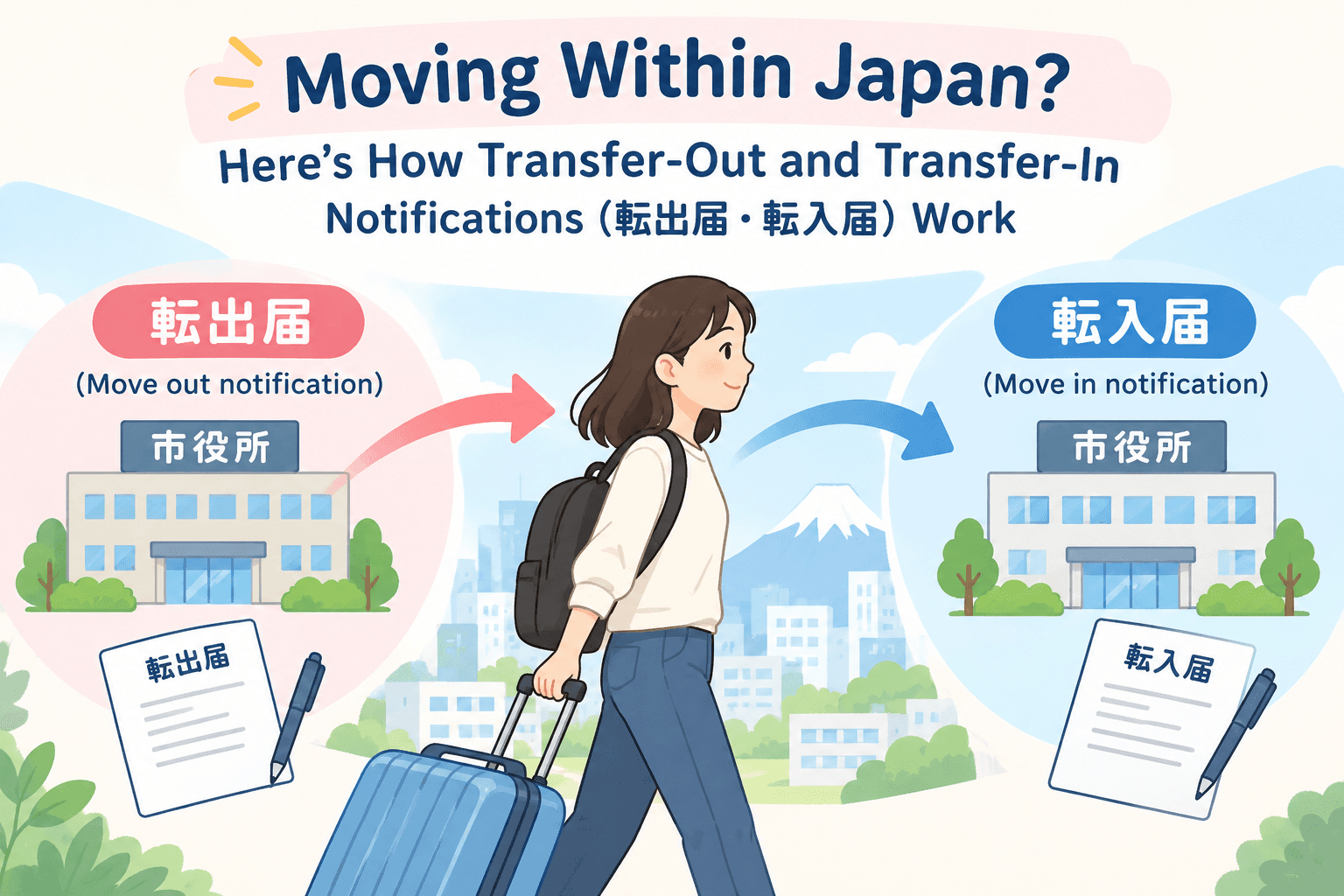
Every time you move to a new apartment in Japan — even within the same country, on the same visa — there's a city hall procedure you need to complete. Miss it, and you can run into issues with your residence card, health insurance, taxes, and more. Here's how it actually works.
The Two Forms You Need to Know
転出届 (Tenshutsu Todoke) — Moving-Out Notification Filed at your current city hall before you move, if you're moving to a different city or ward.
転入届 (Tennyu Todoke) — Moving-In Notification Filed at your new city hall after you move, within 14 days of your move-in date.
If you're moving within the same city or ward, you only need a simpler form: 転居届 (Tenkyo Todoke), filed once at your (unchanged) city hall.
Step-by-Step: Moving Between Different Cities
Before you move — file 転出届 at your current city hall. This can typically be done up to about 2 weeks before your move date. You'll receive a 転出証明書 (Tenshutsu Shomeisho) — a moving-out certificate. Keep this safe; you'll need it for the next step.
After you move — file 転入届 at your new city hall, within 14 days. Bring your 転出証明書, your residence card (在留カード), and your My Number card if you have one. This updates your registered address and triggers updates to several other systems at once.
Update your residence card address. This usually happens automatically as part of the 転入届 process — the city hall will update the address on the back of your residence card on the spot.
What Else Gets Affected
Completing this properly on time affects several other things:
⓵ National Health Insurance (国民健康保険): Your enrollment needs to be transferred to reflect your new address.
⓶ National Pension (国民年金): Similarly needs an address update if you're enrolled through the national system rather than through an employer.
⓷ My Number Card: The address on file needs to match your registered residence.
⓸ Resident tax (住民税): Your tax municipality is based on where you're registered as of January 1st each year, so timing your move and registration can matter for tax purposes.
⓹ Voting registration, child allowance, and other local services are all tied to your registered address.
Common Mistakes to Avoid
Missing the 14-day window. While enforcement varies, failing to register within 14 days can technically result in a fine, and more practically, can cause delays or issues with insurance, tax, and other administrative matters tied to your address.
Losing your 転出証明書. Without it, your new city hall may not be able to process your 転入届 smoothly. If you lose it, contact your old city hall — they can typically reissue it.
Forgetting dependents. If you have a spouse or children also moving with you, they generally need to be included on the same forms, not filed separately, so make sure their information and documents are ready too.
Assuming your employer or agency handles this automatically. Unless your employer or registered support organization has explicitly told you they're managing this for you, assume it's your own responsibility to complete.
What If You're Just Moving Within the Same City?
If your move stays within the same city or ward, you skip the two-step process entirely and just file a 転居届 (Tenkyo Todoke) at your local city hall after moving — a single, simpler procedure.
The Bottom Line
Moving to a new address in Japan isn't finished once you've signed the lease and gotten the keys — the city hall paperwork is just as important. File 転出届 before you leave your old city, then 転入届 within 14 days of arriving at your new one, and bring your moving-out certificate and residence card to make the process smooth. Getting this right on time keeps your health insurance, taxes, and residence card all properly in sync.