Area guides
Renewal Fees (更新料) in Japan: What They Are and Can You Negotiate?
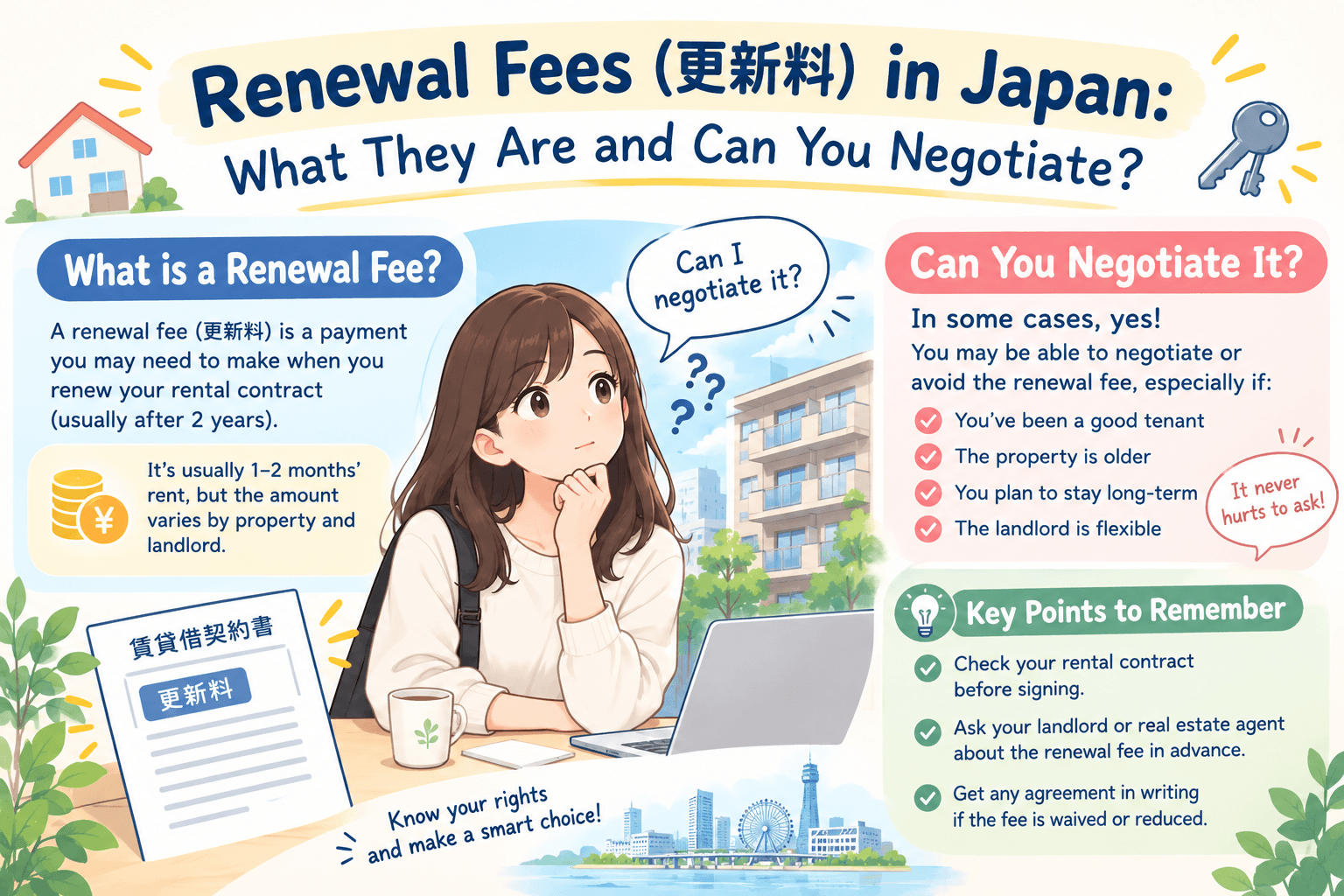
ust when you thought you were done paying fees after move-in, many rental contracts in Japan come with another one: the renewal fee (更新料, koushinryo). Here's what it actually is, when it applies, and whether you have any room to push back.
What Is a Renewal Fee?
Most Japanese rental contracts run for a fixed 2-year term. When that term ends and you want to continue living in the same apartment, many landlords charge a renewal fee to extend the contract — separate from your monthly rent and separate from any agency fees.
>> Typical amount: 1 month's rent, though it can range from 0.5 to 2 months depending on the property and region
>> When it's charged: At each contract renewal, generally every 2 years
>> Who it goes to: Usually the landlord directly, not the agency
Is a Renewal Fee Legal?
Yes. Renewal fees have been challenged in Japanese courts over the years, but the Supreme Court has upheld them as legal, provided the amount and terms are clearly stated in the original contract. This means the key is checking your contract carefully before you sign — not after your first renewal notice arrives.
This Isn't Universal — It Varies by Region
Renewal fee customs vary significantly across Japan:
>>Tokyo and much of the Kanto region: Renewal fees are common and often expected.
>>Kansai region (Osaka, Kyoto) and parts of Kyushu: Renewal fees are less common; some areas favor other fee structures instead.
>>No renewal fee" (更新料なし) listings exist in every region and have become increasingly common as landlords compete for tenants in certain markets.
Always check the specific terms for your contract and region rather than assuming based on general reputation.
Can You Negotiate It?
Sometimes — though success depends heavily on your specific situation:
>>Good payment history matters. If you've paid rent on time for the full term with no issues, some landlords are open to reducing or waiving the fee, especially through a good relationship with your agency.
>>Market conditions help your case. In areas with high vacancy rates or if similar nearby properties don't charge a renewal fee, this gives you leverage to ask.
>>Ask through your agency, not directly. In most cases, your leasing agency serves as the go-between and can raise the request more comfortably than you contacting the landlord directly.
>>Timing matters. Bringing it up early — well before the renewal deadline — gives the landlord time to consider it, rather than putting them in a rushed position.
Negotiation isn't guaranteed, and outright refusal is common, especially in high-demand areas where landlords know another tenant will pay it without objection.
What Happens If You Don't Pay It?
Refusing to pay a legitimate, contractually specified renewal fee can be treated as a breach of contract, potentially leading to non-renewal or even eviction proceedings in serious cases. If you genuinely can't afford it or believe it's being applied unfairly, the better path is:
⓵Raise it directly and politely with the agency well before the deadline
⓶Propose alternatives, such as a partial payment or extending the negotiation timeline
⓷Consult a local consumer affairs center (消費生活センター) if you believe the fee wasn't properly disclosed in your original contract
The Bottom Line
Renewal fees are a normal, legal part of renting in many parts of Japan — usually around one month's rent, charged every two years. They're not universal, and they're not always fixed in stone, but negotiating them successfully depends on your payment history, the local market, and how early you raise the conversation. Most importantly, check for this clause before you sign your original lease, so a renewal fee is never a surprise two years down the line.