Area guides
Kawasaki vs Yokohama: Where Should You Rent?
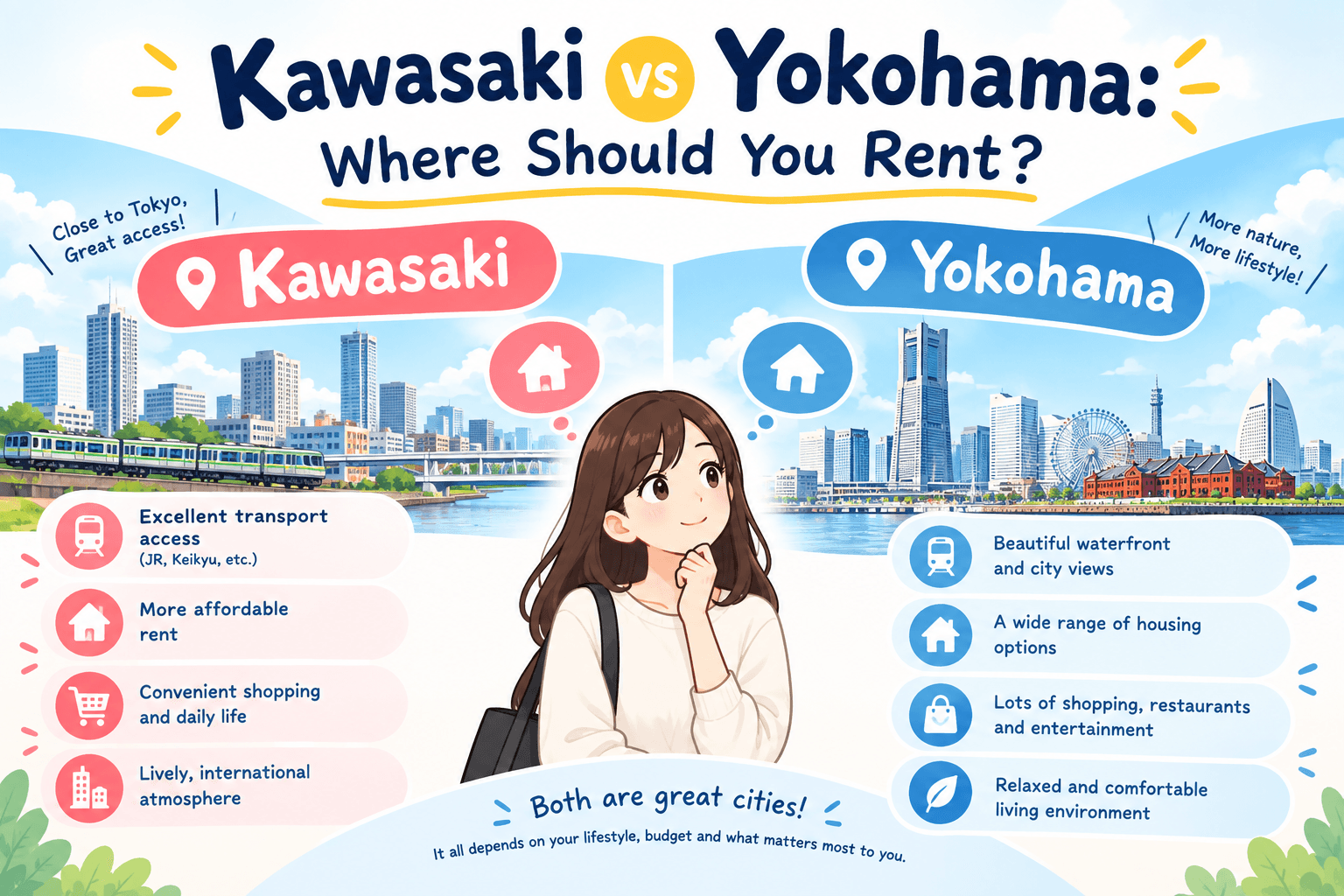
Both cities sit right next to Tokyo, both are in Kanagawa, and both come up constantly when people talk about "living near Tokyo without Tokyo prices." But Kawasaki and Yokohama offer genuinely different lifestyles. Here's how to decide.
Kawasaki: The Transit Hub
Kawasaki has topped Kanagawa's "most-searched rental area" rankings for four years running, largely thanks to strong transit access, everyday livability, and rent that stays more reasonable than you'd expect for the convenience it offers.
Transit: Kawasaki Station connects directly to JR Tokaido, Keihin-Tohoku, and Nanbu lines, putting Shinagawa about 11 minutes away and central Tokyo within easy reach.
Rent: Near Kawasaki Station, a 1K within a 10-minute walk averages around ¥71,000/month; just past 11 minutes, it drops to around ¥62,000.
Musashi-Kosugi and Motosumiyoshi. These two Kawasaki neighborhoods have become genuinely trendy, ranking consistently in the top 3 most-searched areas in Kanagawa. Both offer direct, no-transfer access to Shibuya via the Tokyu Toyoko Line and to Yokohama via the same line, plus Meguro Line access into central Tokyo office districts like Otemachi.
Character: More practical and residential than glamorous — Kawasaki has historically been tied to industrial and manufacturing work, and this still shapes parts of the city, especially areas further from the station.
Yokohama: The Bigger, More International City
Yokohama is Japan's second-largest city, with a stronger international, cosmopolitan identity — a longtime port city with an established Chinatown, waterfront district (Minato Mirai), and generally more variety in shopping, dining, and lifestyle options than Kawasaki.
Rent: Central Yokohama Station and Minato Mirai command premium rent, especially for higher-end or newer buildings. Move a bit further out — areas like Totsuka, Kikuna, or Higashi-Kanagawa — and rent drops meaningfully while still keeping solid access to central Yokohama and beyond.
Character: More polished, more tourist-friendly, and generally seen as having more prestige as an address than Kawasaki, which can matter for some renters and not at all for others.
Transit: Yokohama Station is a major hub in its own right, with access to the Tokyu Toyoko Line, JR lines, and the Minato Mirai Line, making it well-connected both toward Tokyo and further into Kanagawa.
Side-by-Side
Best for: Kawasaki offers fast, practical access to both Tokyo and Yokohama. Yokohama offers a bigger-city lifestyle with more polish and variety.
Rent (central station area): Kawasaki's rent is generally more moderate. Yokohama's rent is higher near the station and Minato Mirai, but cheaper further out.
Atmosphere: Kawasaki is practical and residential, with industrial roots. Yokohama is cosmopolitan, tourist-friendly, and carries more prestige.
Standout areas: In Kawasaki, that's Musashi-Kosugi and Motosumiyoshi. In Yokohama, it's Minato Mirai for a premium lifestyle, or Totsuka and Kikuna for something more budget friendly.
Commute to Tokyo: Kawasaki is very fast — about 11 minutes to Shinagawa. Yokohama is also fast, though slightly longer than Kawasaki in most cases.
How to Decide
>> Want the fastest, most cost-effective access to Tokyo? Kawasaki, especially Musashi-Kosugi or Motosumiyoshi if you also want Shibuya access.
>>Want a bigger city to feel with more lifestyle variety, and don't mind paying more centrally? Yokohama, particularly if Minato Mirai's waterfront lifestyle appeals to you.
>>Want Yokohama's access without Yokohama's central rent? Look at outer Yokohama areas like Totsuka or Kikuna rather than the station area itself.
The Bottom Line
Kawasaki tends to win on practicality and value for commuters, especially toward both Tokyo and Yokohama. Yokohama wins on lifestyle variety, international character, and overall polish — at a price, especially near the station. Neither is objectively "better"; it comes down to whether you're optimizing for commute efficiency or for the city itself.