Area guides
Learning Japanese: Practical Tips and Resources for Foreign Residents to Get Started
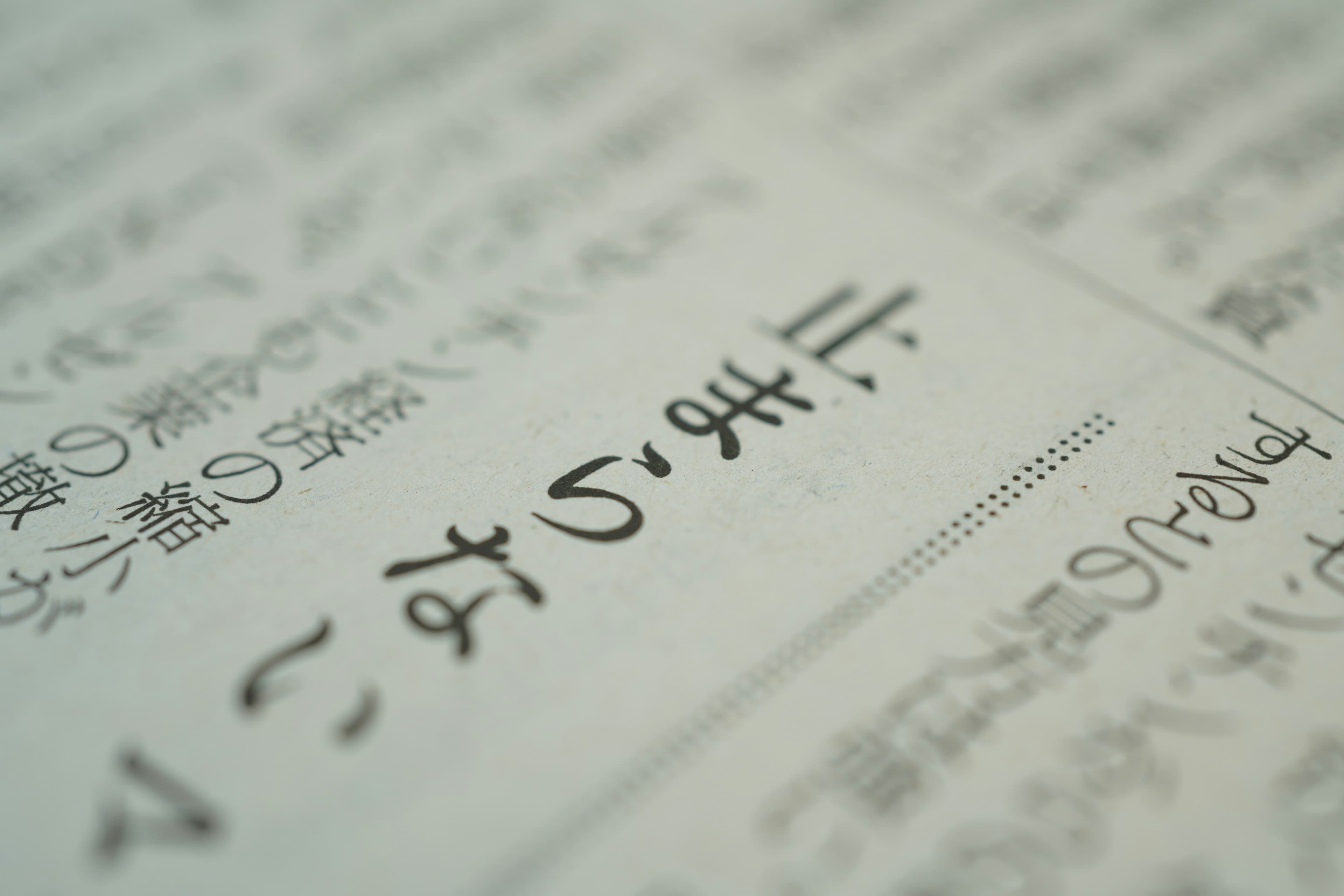
Learning Japanese is one of the most rewarding steps a foreign resident can take in Japan. Even basic conversational ability dramatically improves your daily life, helps you build deeper connections, and earns enormous respect from Japanese people. Here's a practical, structured guide to getting started.
Understanding the Japanese Writing Systems
Japanese uses three writing systems — mastering them is the foundation of literacy:
1. Hiragana (ひらがな)
46 phonetic characters covering all Japanese sounds. This is the first script every learner should master. With focused study, you can learn hiragana in 1–2 weeks.
2. Katakana (カタカナ)
Another 46 phonetic characters, used primarily for foreign loanwords (e.g., コーヒー = koohii = coffee). Also learnable in 1–2 weeks once you have hiragana.
3. Kanji (漢字)
Chinese-origin characters with Japanese readings. There are 2,136 "joyo" (commonly used) kanji — a long-term goal. Start with the most common 100–200 kanji for daily life. Signs, menus, and station names become readable quickly once you know the basics.
4. Romaji
Romanized Japanese — useful when starting out, but avoid relying on it long-term as it slows down your progress.
Best Apps for Learning Japanese
- Duolingo: Fun, gamified approach — great for beginners to build vocabulary and basic sentences. Free.
- Anki: Flashcard app using spaced repetition — the gold standard for learning kanji and vocabulary. Free (with paid decks available).
- WaniKani: Systematic kanji learning using mnemonics. Highly effective — 60 levels covering 2,000 kanji. Subscription-based.
- Bunpro: Grammar study using spaced repetition. Essential for building correct sentence structure. Subscription-based.
- HelloTalk / Tandem: Language exchange apps connecting you with native Japanese speakers who want to learn your language. Free with premium options.
- Pimsleur Japanese: Audio-based learning — excellent for improving speaking and listening comprehension during commutes.
Textbooks and Study Materials
- Genki I & II: The most widely used Japanese textbook series for beginners through intermediate. Used in universities worldwide.
- Minna no Nihongo: Another popular textbook series, entirely in Japanese from the start — great for immersive learning.
- Japanese from Zero!: Friendly, gradual approach — popular with self-learners.
- Tobira: Intermediate to advanced learners. Bridges the gap between textbook and native materials.
Online Courses and Structured Learning
- JapanesePod101: Comprehensive audio and video lessons for all levels. Large content library. Subscription-based.
- NHK World Japanese Lessons: Free beginner lessons from Japan's national broadcaster — available in multiple languages.
- Coursera / edX: University-level Japanese language courses, often free to audit.
- iTalki: Book lessons with professional Japanese teachers or community tutors online. Flexible scheduling and rates.
Local Resources in Japan
Living in Japan is itself the greatest Japanese learning opportunity. Take advantage of:
- City-run language classes: Most city and ward offices offer low-cost or free Japanese language classes for foreign residents. Check your local municipal website.
- Volunteer Japanese tutors (Nihongo Volantia): Many communities have volunteer Japanese teaching programs where local residents teach foreigners for free.
- JLPT preparation classes: Language schools offer courses aimed at the Japanese Language Proficiency Test (JLPT) — a recognized certification at levels N5 (beginner) through N1 (advanced).
- Language exchange meetups: Search on Meetup.com or Facebook groups for local language exchange events in your city.
The JLPT: Japan's Official Language Certification
The Japanese Language Proficiency Test (JLPT) is held twice a year (July and December). It's recognized by employers and universities in Japan and worldwide. Levels:
- N5: Absolute beginner — hiragana, katakana, ~100 kanji, basic grammar
- N4: Elementary — ~300 kanji, basic daily conversation
- N3: Intermediate — ~650 kanji, can understand everyday situations
- N2: Upper intermediate — ~1,000 kanji, near-native newspaper reading
- N1: Advanced — ~2,000 kanji, full proficiency
Practical Tips for Faster Progress
- Immerse yourself daily: Change your phone, social media, and apps to Japanese. Watch Japanese TV with subtitles (Netflix has Japanese content with Japanese subs).
- Shadow native speakers: Listen and repeat — mimic pronunciation and rhythm to improve speaking naturally.
- Keep a vocabulary notebook: Write new words you encounter in daily life. Context makes vocabulary stick.
- Practice with locals: Ask convenience store staff, neighbors, or colleagues to correct your Japanese. Most Japanese people appreciate the effort greatly.
- Set JLPT as a goal: Working toward N4 or N3 gives structure to your studies and a tangible milestone to achieve.
- Be consistent: 20–30 minutes of daily study beats 3 hours once a week.
Common Phrases to Start Using Today
- "Nihongo wo benkyou shite imasu" — I am studying Japanese
- "Yukkuri hanashite kudasai" — Please speak slowly
- "Mou ichido itte kudasai" — Please say that again
- "Nihongo ga sukoshi wakarimasu" — I understand a little Japanese
Learning Japanese is a lifelong journey, but every word you learn opens new doors in Japan. Start small, stay consistent, and enjoy the process!