Area guides
Japanese Food Culture: Must-Try Dishes, Dining Etiquette, and How to Order at Restaurants
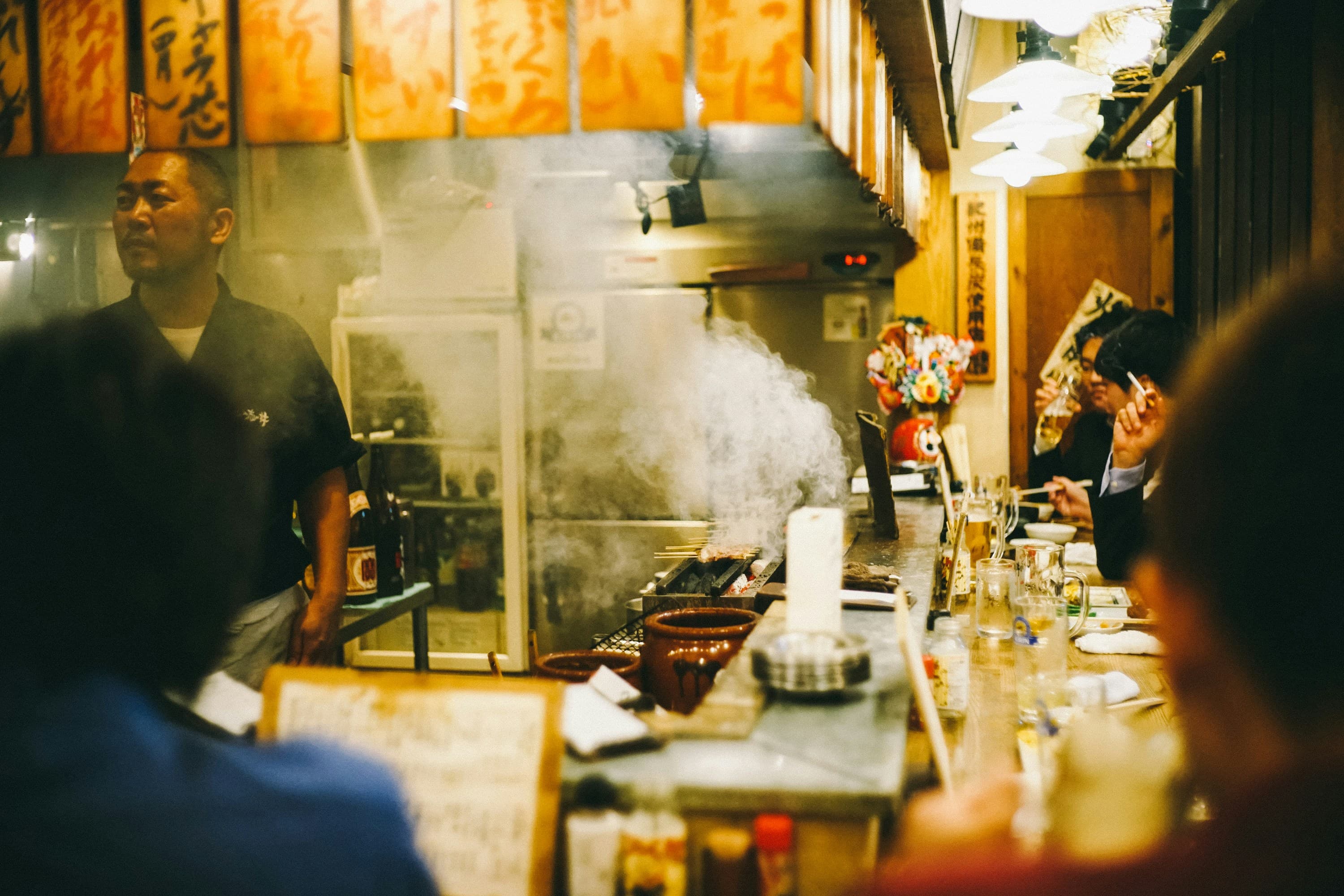
Japan's food culture is widely considered one of the greatest in the world — so much so that Tokyo has more Michelin-starred restaurants than any other city on earth.
But Japanese cuisine extends far beyond sushi and ramen.
For foreign residents, discovering the full depth of Japanese food is one of the most rewarding parts of life in Japan.
Must-Try Japanese Dishes
Sushi (寿司)
Japan's most iconic food comes in many forms: nigiri (hand-pressed rice with fish), maki (rolled), temaki (hand rolls), and chirashi (scattered over rice bowls).
Kaiten-zushi (conveyor belt sushi) is a budget-friendly way to enjoy fresh sushi, while high-end omakase restaurants offer multi-course chef's tasting menus.
Ramen (ラーメン)
Japan's beloved noodle soup comes in four major styles: shoyu (soy sauce-based, Tokyo-style), miso (rich, from Hokkaido), tonkotsu (creamy pork bone broth, from Kyushu), and shio (salt-based, lighter broth).
Each region of Japan takes great pride in its local ramen style.
Soba and Udon (蕎麦・うどん)
Soba (buckwheat noodles) and udon (thick wheat noodles) are everyday staples eaten hot in broth or cold with dipping sauce.
Particularly popular in winter served hot, or in summer as cold zaru (dipping) style.
Tempura (天ぷら)
Lightly battered and deep-fried seafood and vegetables, served with a light broth for dipping.
Best enjoyed at specialist tempura restaurants where each piece is fried to order.
Yakitori (焼き鳥)
Skewered and grilled chicken — every part of the chicken is used, from breast to liver to cartilage.
A staple of Japanese izakaya (居酒屋) culture.
Tonkatsu (とんかつ)
Breaded and deep-fried pork cutlet, served with shredded cabbage, rice, and miso soup.
Available at specialist tonkatsu restaurants found throughout Japan.
Okonomiyaki (お好み焼き)
A savory pancake containing various ingredients like cabbage, pork, seafood, and noodles.
Popular in Osaka and Hiroshima, each with their own regional variations.
Curry (カレー)
Japanese curry is distinctly different from Indian or Thai curry — sweeter, milder, and thicker.
Commonly served over rice with a choice of toppings (beef, chicken, pork, or vegetables).
Izakaya Food (居酒屋)
Izakayas are Japanese gastropubs serving small plates of food alongside drinks.
Popular dishes include edamame, karaage (fried chicken), gyoza (dumplings), yakitori, and tamagoyaki (sweet rolled egg).
How to Order at Japanese Restaurants
Ticket Machine Restaurants (食券機, Shokken-ki)
Many ramen shops, tonkatsu restaurants, and cafeteria-style eateries use vending machines where you select and pay for your meal before sitting down.
The machine dispenses a ticket that you hand to the server.
Most machines have picture menus — look for the button with a photo of what you want.
Tabletop Ordering
Many restaurants use tabletop tablets or call bells for ordering.
Say "sumimasen" (すみません — excuse me) to get a server's attention.
Point at menu items if you cannot read Japanese — most menus include photos.
Dining Etiquette in Japan
Say itadakimasu before eating: This phrase (いただきます) is said before meals as a form of gratitude. It roughly means "I humbly receive."
Say gochisousama after eating: At the end of a meal, say ごちそうさまでした (gochisōsama deshita) to express appreciation for the food.
Do not tip: Tipping is not practiced in Japan and can even be considered rude or confusing. The price you pay is the complete price.
Chopstick etiquette: Never stick chopsticks upright in rice (associated with funeral rituals) and never pass food chopstick-to-chopstick (also a funeral custom).
Slurping noodles is acceptable: Unlike in Western countries, slurping ramen or soba is perfectly acceptable and even considered a sign of enjoying the meal.
No walking and eating: Eating while walking on the street is generally frowned upon in Japan. Eat at the food stall or a nearby seating area.
Shoes off at some restaurants: Traditional restaurants with tatami seating require you to remove your shoes at the entrance.
Useful Japanese Phrases for Dining
"Sumimasen" (すみません): Excuse me / to get a server's attention.
"Kore wo kudasai" (これをください): I'll have this, please (while pointing at the menu).
"Osusume wa nan desu ka?" (おすすめは何ですか?): What do you recommend?
"Okaikei onegaishimasu" (お会計お願いします): The check, please.
"Mizu wo kudasai" (水をください): Water, please.
"Arerugi ga arimasu" (アレルギーがあります): I have allergies. (Follow with the specific allergen.)
"Bejitarian desu" (ベジタリアンです): I am vegetarian.
Dietary Restrictions and Allergies
Japan is not historically known for being vegetarian or vegan-friendly, though this is changing rapidly.
Finding meat-free options can be challenging in smaller restaurants.
Hidden dashi (fish stock) is common in many dishes that appear vegetarian.
Gluten-free dining is also limited — soy sauce contains wheat, and many sauces and broths include gluten.
Major allergen labeling is required on packaged foods for 8 allergens (egg, milk, wheat, buckwheat, peanut, shrimp, crab, walnut).
For restaurant meals, communicate your restrictions clearly to staff.
Convenience Store Food Culture
Japanese convenience stores (コンビニ, konbini) — 7-Eleven, Lawson, FamilyMart — offer surprisingly high-quality food.
Hot items (nikuman pork buns, fried chicken, coffee) are available at the counter.
Refrigerated onigiri, sandwiches, salads, and bento boxes are excellent value.
Convenience store food is a significant and beloved part of Japanese daily food culture, not a last resort.
Japan's food culture rewards curiosity and openness.
Step outside your comfort zone, try the unfamiliar, and you will discover one of the world's most extraordinary culinary traditions.