Area guides
Japan's Train System Explained: How to Navigate Public Transportation as a Foreign Resident
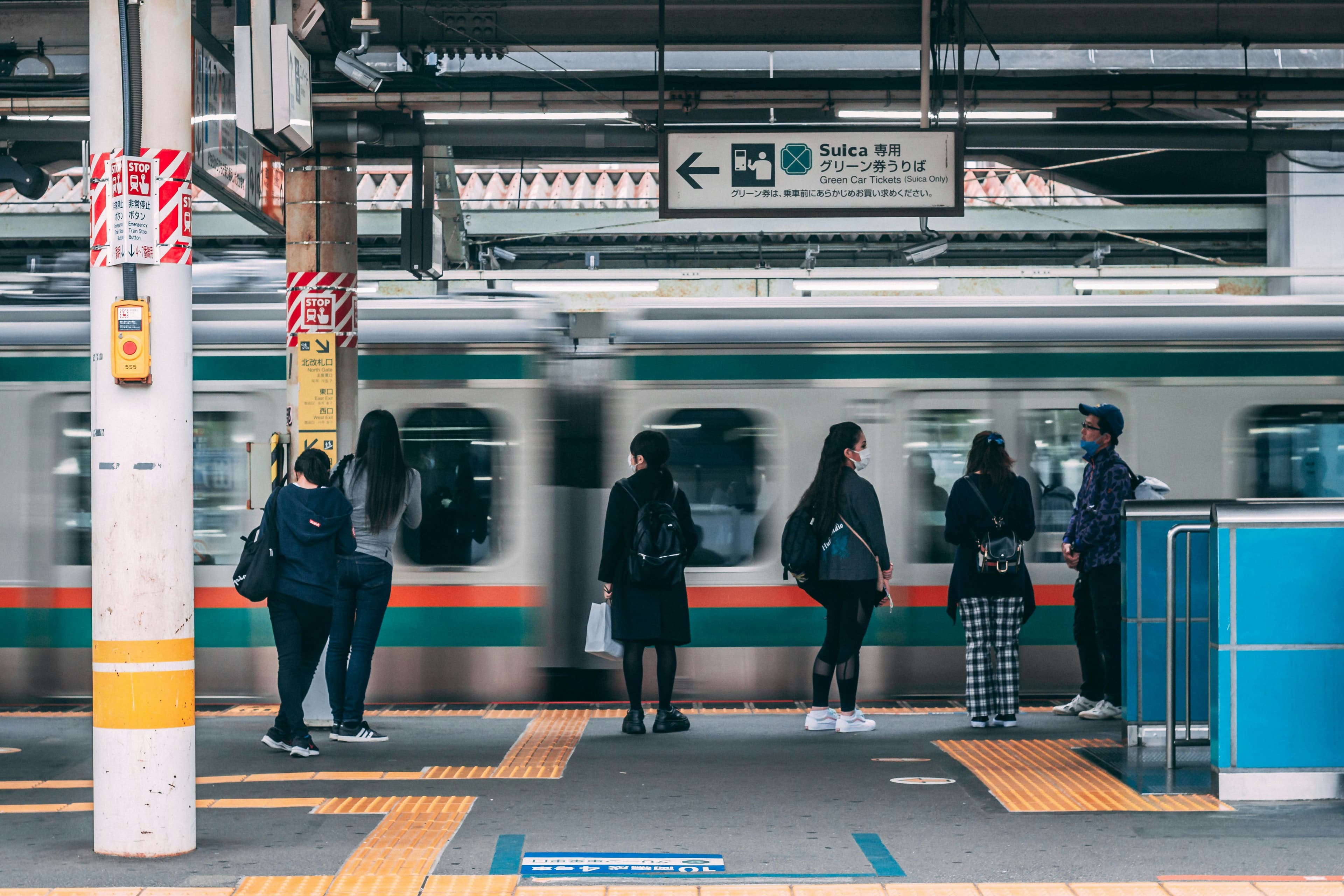
Japan is world-famous for its extraordinary public transportation network.
Trains run on time to the minute, routes cover even rural areas, and the system integrates seamlessly across multiple operators.
For foreign residents, mastering the train system quickly transforms daily life and opens up the entire country for exploration.
Overview of Japan's Rail Networks
Japan's rail system is operated by multiple companies working together:
JR (Japan Railways): The largest rail operator, running long-distance Shinkansen (bullet trains) and local lines across all regions. The most important JR pass for new residents is the JR Pass — a flat-rate ticket for unlimited Shinkansen and JR line travel, available to foreign visitors.
Private Railways (私鉄, Shitetsu): Companies like Hankyu, Tokyu, Odakyu, Keio, and Kintetsu operate regional lines and are often the most convenient option for daily commuting in major cities.
Tokyo Metro and Toei Subway: Tokyo's subway system, operated jointly by Tokyo Metro and the Tokyo Metropolitan Government (Toei). Covers virtually every part of the city.
Osaka Metro: Osaka's comprehensive subway network.
Shinkansen (新幹線, Bullet Train): Japan's high-speed rail network connects major cities across the country at speeds up to 320 km/h. The Tokaido Shinkansen (Tokyo–Osaka) is the world's busiest high-speed rail line.
IC Cards: The Essential Travel Card
The most important tool for daily train use is an IC card (integrated circuit card).
These rechargeable smart cards can be used on virtually all trains, buses, and even at many convenience stores, vending machines, and restaurants.
Suica (スイカ): Issued by JR East, commonly used in the Tokyo area and accepted nationwide.
Pasmo (パスモ): Issued by Tokyo's private railways and subway operators, fully interchangeable with Suica.
ICOCA: Used in the Osaka/Kansai region.
Manaca, TOICA, Hayakaken: Regional IC cards used in Nagoya, Shizuoka, Fukuoka respectively.
How to Get and Use an IC Card
Purchase at any major station ticket machine or service counter.
Initial purchase includes a ¥500 deposit (refundable when you return the card).
Recharge at station ticket machines, convenience stores, or using a smartphone app.
Tap the card on the reader at the entry gate, tap again at the exit gate — the fare is automatically deducted.
Understanding Fares
Japanese train fares are calculated based on distance.
Fares typically range from ¥140 (short local trips) to several thousand yen for long-distance travel.
Commuter passes (定期券, Teikiken) offer significant savings for regular routes — you pay a flat fee for unlimited travel on your commute route for 1, 3, or 6 months.
Many employers reimburse commuter pass costs as part of standard benefits.
Navigating Stations
Japanese train stations can be enormous and complex, especially in major cities.
Here are tips for navigating them confidently:
Signs are bilingual: All major stations display signs in Japanese, English, Chinese, and Korean. Station names are shown in Roman letters (romaji).
Platform numbers: Check the platform number and train destination on the departure boards before boarding.
Priority seating (優先席, Yūsen-seki): Seats near the doors are reserved for elderly, pregnant, and disabled passengers. Avoid these seats when the train is crowded.
Quiet carriages: Some Shinkansen and express trains have designated quiet cars where phone calls are not permitted.
Rush hour: Tokyo and Osaka rush hours (7:00–9:00 AM and 5:30–8:00 PM) can be extremely crowded. Staff called "pushers" (押し屋) help fit passengers into packed trains.
Useful Apps for Train Navigation
Google Maps: Excellent for route planning in Japan, including real-time train information.
Hyperdia: A dedicated Japan train route search app used by locals and tourists alike.
Yahoo! Transit (乗換案内): The most popular route search app among Japanese users.
JR Odekake Net: JR West's official app for Kansai area trains.
Navitime: Comprehensive navigation including trains, buses, and walking directions.
Long-Distance Travel: Shinkansen Tips
Book Shinkansen tickets in advance at any JR station, JR ticket offices (みどりの窓口), or online via the JR website.
Two types of seats: Reserved (指定席, Shiteiseki) and Unreserved (自由席, Jiyūseki). Reserved seats cost slightly more but guarantee your seat.
Luggage: Large suitcases must be stored in designated overhead spaces on newer Shinkansen models — book a seat with luggage storage if traveling with large bags.
Buses
Local buses complement the train network, especially in residential areas not served by trains.
Most buses require exact change or an IC card — drivers do not provide change for large bills.
Bus stops display route maps and timetables (often only in Japanese in smaller cities).
Etiquette on Japanese Public Transport
No phone calls: Talking on the phone is strongly discouraged on trains. Set your phone to silent mode.
Keep voices low: Japanese trains are generally quiet. Avoid loud conversations.
Do not eat on local trains: Eating is generally not accepted on local and subway trains (though it is allowed on Shinkansen).
Queue properly: Wait in marked lines on platforms and allow passengers to exit before boarding.
Backpacks: Remove your backpack and hold it in front of you or place it in the overhead rack when the train is crowded.
Japan's public transportation system is a genuine pleasure once you understand it.
Master the IC card, download a good route app, and you will find that getting around Japan is one of the most reliable and stress-free travel experiences in the world.